
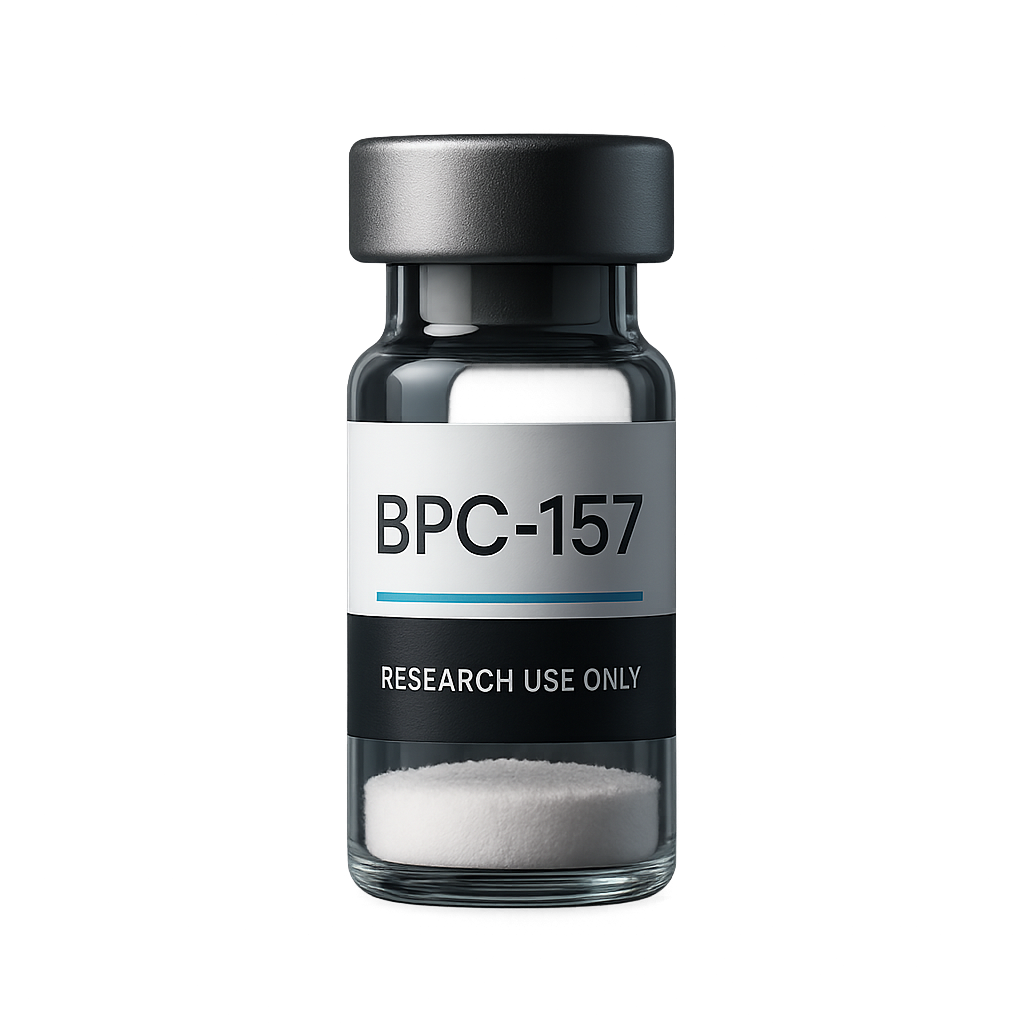
Description
What is BPC-157?
BPC-157 is a synthetic pentadecapeptide of 15 amino acids corresponding to a partial sequence derived from a protein isolated from human gastric juice. Notably stable in aqueous and acidic environments relative to many native peptides, it is supplied as a lyophilized powder and widely used as a reference compound in pre-clinical and in-vitro models exploring cytoprotection, vascular biology, and connective-tissue repair pathways.
How BPC-157 works (research context)
In pre-clinical and in-vitro models, BPC-157 is studied for modulation of angiogenesis through upregulation of VEGFR2 and downstream FAK-paxillin, Akt/PI3K, and eNOS signaling. Investigators also examine its proposed influence on the Egr-1 transcription factor, nitric-oxide balance, and growth-factor expression relevant to fibroblast and endothelial cell migration.
Research applications
- In-vitro investigation of angiogenesis and VEGFR2-mediated endothelial signaling
- Pre-clinical models of tendon, ligament, and muscle repair mechanisms
- Study of cytoprotection and mucosal integrity pathways
- Reference peptide for fibroblast and endothelial migration assays
Key facts
- 15-amino-acid pentadecapeptide derived from a gastric-juice protein fragment
- Recognized for unusual stability in aqueous and acidic conditions
- Available in 10mg and 20mg research strengths
- Frequently paired with TB-500 in comparative tissue-repair studies
Product specifications
- Class: Synthetic stable gastric pentadecapeptide
- Also known as: Body Protection Compound 157; Pentadecapeptide BPC 157
- Form: Lyophilized powder vial
- Purity: ≥ 99% (HPLC verified)
- Testing: Independent third-party HPLC + mass spectrometry
- Documentation: Certificate of analysis per batch
- Storage: Store lyophilized at -20C; reconstituted solution refrigerated at 2-8C and used promptly.
For laboratory research use only. Not for human or veterinary use, consumption, diagnostic, or therapeutic purposes.


Dr. Ronan Mills (verified owner) –
BPC-157 at 99.4% on the COA, confirmed by our HPLC. VEGFR2 upregulation in the endothelial assay was clean and reproducible. Excellent reference peptide.
Olivia Hartmann (verified owner) –
COA on every batch, mass spec matched the 15-residue sequence. Trustworthy source for tissue-repair research.
Indira Patel (verified owner) –
Reconstituted clear and stayed stable in solution longer than most peptides we handle. Fibroblast migration assays were consistent.
Dr. Sean Whitlock (verified owner) –
Pairs perfectly with our TB-500 comparative work. Batch consistency on the pentadecapeptide has been excellent.
M. Kovač (verified owner) –
Good purity and traceable lot. Shipping took an extra day but packaging and cold pack were fine. No hesitation reordering.