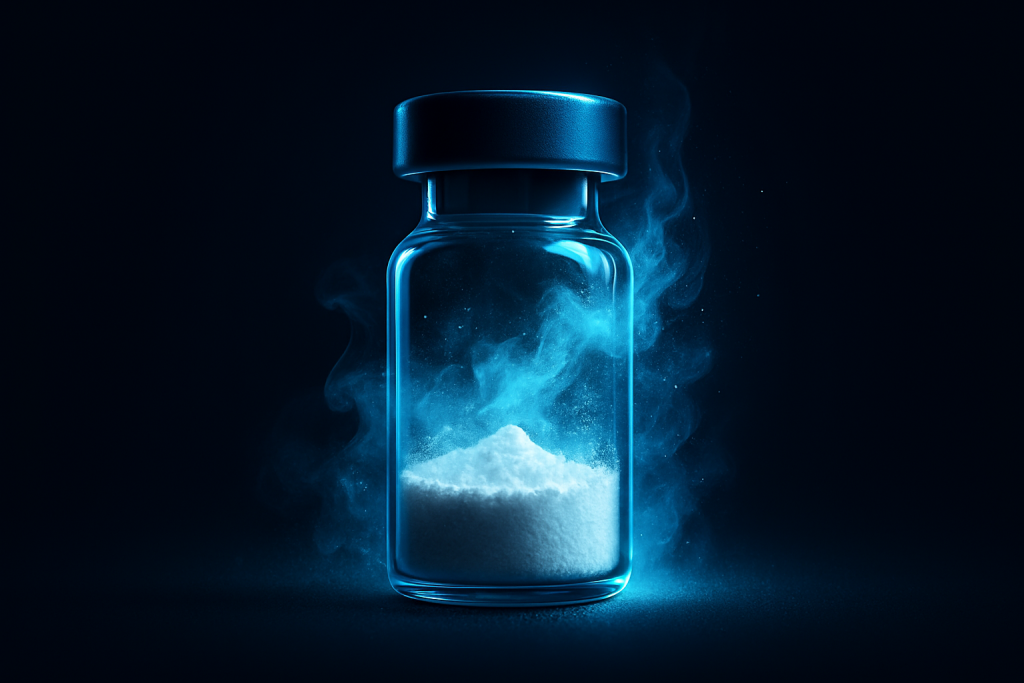
If you have ordered research peptides, you have received them as a fine white powder sealed in a small glass vial. That powder is the result of lyophilization — freeze-drying — and it is the single most important reason peptides can be shipped and stored reliably.
What lyophilization does
Peptides in solution are fragile. Water provides the medium for the chemical reactions — hydrolysis, oxidation, aggregation — that slowly break a peptide down. Lyophilization removes that water. The peptide solution is frozen solid, then placed under vacuum so the ice converts directly from solid to vapor (a process called sublimation) without ever passing back through a liquid phase. What remains is a dry, porous cake of pure peptide.
Why it matters for stability
In dry form, the reactions that degrade peptides are dramatically slowed. A lyophilized peptide stored cold and dark can remain stable for an extended period, whereas the same compound in solution may degrade in a matter of weeks. This is why suppliers ship powder, and why you should keep a vial sealed and frozen until you are ready to reconstitute it.
Handling the powder
- Let it reach temperature. Allow a frozen vial to equilibrate while still sealed to limit condensation, which reintroduces moisture.
- Inspect the cake. An intact white cake or powder is normal. A vial that looks melted or discolored may have been exposed to heat in transit.
- Reconstitute only what you need. Once water is added, the stability clock starts again.
Lyophilization is, in short, a pause button for chemistry. Respecting it — through correct cold storage and careful reconstitution — is what keeps your research material at the purity stated on its certificate of analysis.