
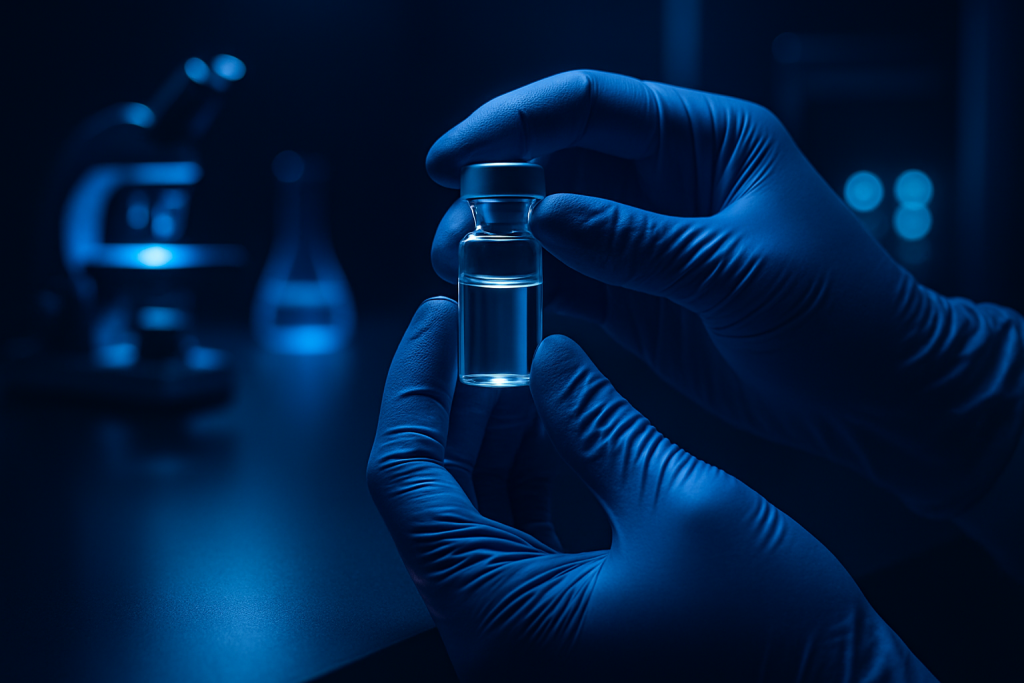
This protocol describes a clean, repeatable workflow for taking a research peptide from a sealed vial of powder to frozen, single-use aliquots. Follow it in order; each step protects the purity verified on the batch certificate of analysis.
1. Receive and inspect
On arrival, confirm the batch number on the vial matches the accompanying certificate of analysis. Inspect the lyophilized cake — it should be an intact white powder, not melted or discolored. Move the vial to cold storage promptly if you are not using it immediately.
2. Equilibrate
Before opening a frozen vial, let it warm toward room temperature while still sealed. This limits condensation, which would otherwise introduce moisture onto the powder.
3. Prepare your diluent
Select the appropriate diluent for your protocol — typically bacteriostatic water for multi-use vials. Have a clean, sterile syringe and a tidy work surface ready.
4. Reconstitute
Draw the calculated volume of diluent and add it slowly, directing the stream down the inner wall of the vial onto the cake. Do not inject forcefully and do not shake. Swirl gently and allow the peptide to dissolve into a clear solution.
5. Calculate and record concentration
Confirm your final concentration from the known peptide mass and the diluent volume added, then write it down. Accurate documentation here underpins reproducibility.
6. Aliquot
Divide the solution into single-use volumes in clean, labeled tubes. Mark each with the compound, concentration, and date. Aliquoting is what allows you to thaw only what you need, only once.
7. Store
- In use: refrigerate at 2–8°C.
- Reserve aliquots: freeze at -20°C or colder.
- Remaining powder: reseal and return to -20°C with desiccant.
Good practice
Work cleanly, avoid repeated freeze-thaw cycles, keep solutions out of direct light, and document every step. None of this is complicated — but consistency is what keeps a 99% compound performing like one.


